Learning notes from LabGo
The Impact Map
I wrote this after building LabGo because the code had taught me a lot, but I could still feel parts of it slipping away. Explaining every stage made me revisit the assumptions, reread the results, and keep the ideas long enough to use them again.
78 pages · PDF · free to read · copyright © 2026
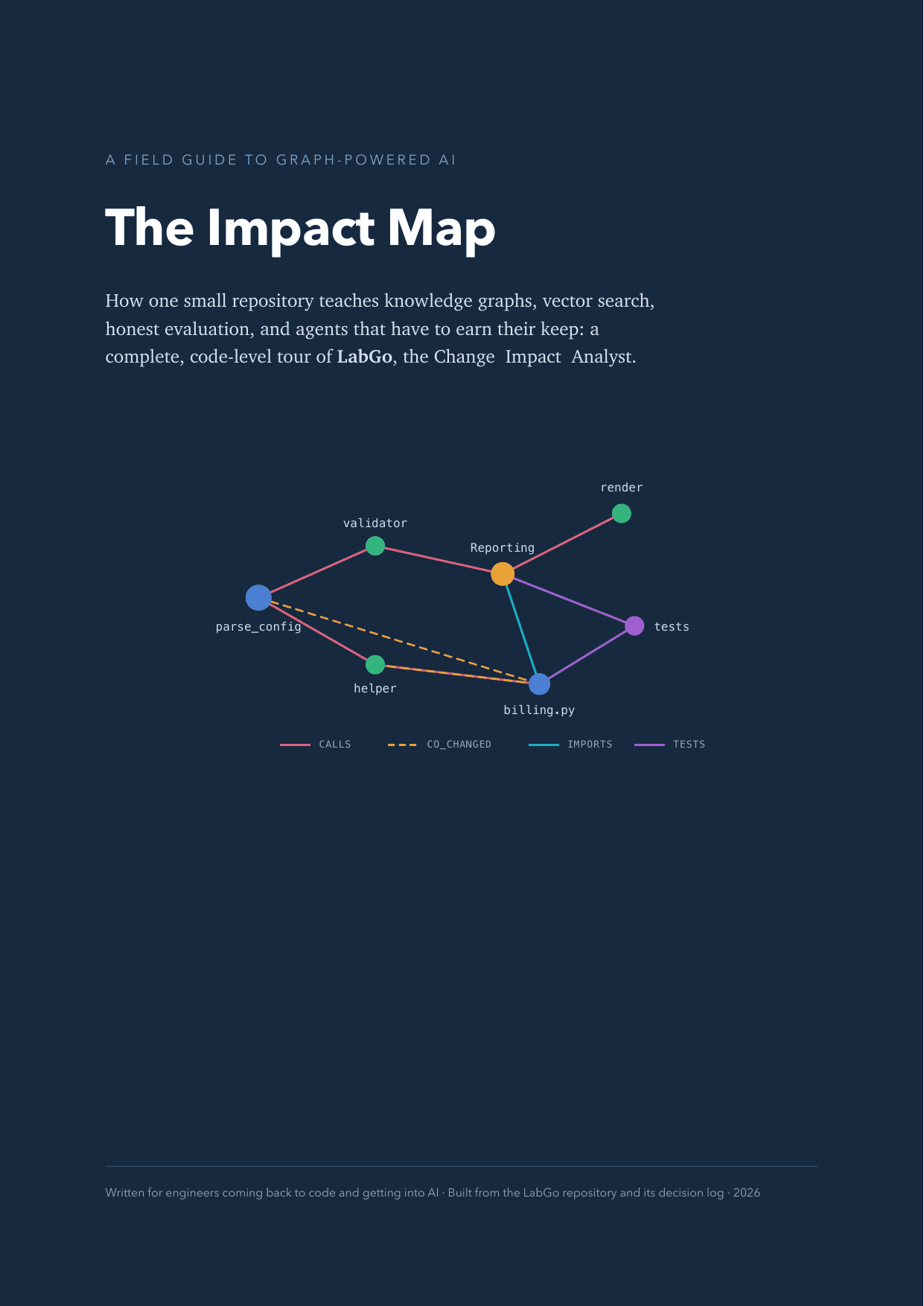
The book came after the build
LabGo began as a way to learn GraphRAG with a problem that could push back. A codebase impact question cannot be solved by vector similarity alone, and a convincing agent still has to beat a simpler method on the same exam.
Writing the guide changed how I remembered the project. I had to explain why a 94.9% result was misleading, why prediction size mattered, and why the agent's loss pointed to a missing budget rather than a grand conclusion about LLMs. That process did more for retention than another pass through the source code.
Inside the guide
- Why connections answer dependency questions that similarity cannot
- How git history can become a rough but useful answer key
- What changed when graph, vector, and co-change signals faced the same budget
- Why the agent lost, and what the result does and does not prove